

Dental Implants Potomac: Expert Tooth Replacement Solutions

Reliable Dental Implants in Potomac for Lasting Tooth Replacement
Losing one or more teeth can affect much more than the appearance of your smile. Missing teeth may make chewing more difficult, change the way your remaining teeth come together, and affect your confidence in everyday situations. Dental Implants Potomac patients can consider are designed to replace the root portion of a missing tooth and provide a stable foundation for a dental crown, bridge, or denture.
At Potomac Perio Implant, Dr. Shahram Vaziri provides specialized periodontal and implant-focused care, helping patients understand their tooth-replacement options and determine whether dental implants are appropriate for their individual needs.
What Are Dental Implants and Why Are They Used to Replace Missing Teeth?
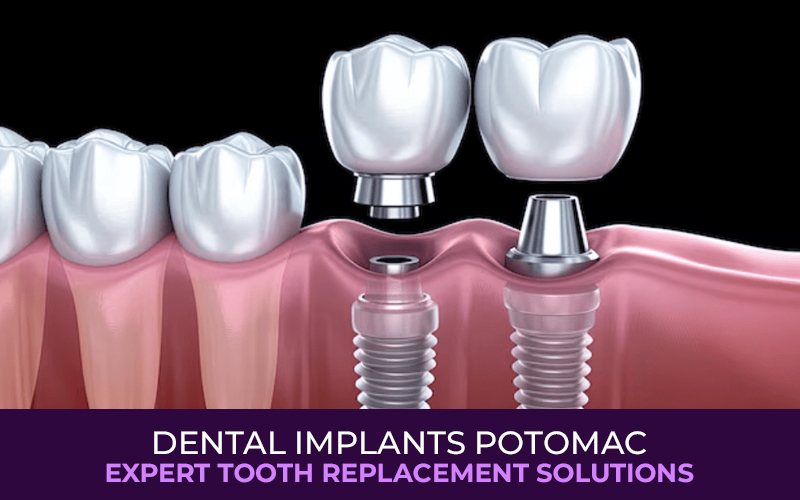
A dental implant is a small biocompatible post that is surgically placed into the jawbone to replace the root of a missing tooth. After the implant has had time to integrate with the surrounding bone, it can support a restoration designed to replace the visible portion of the tooth.
A complete implant restoration may include three primary components:
- Implant: The portion placed within the jawbone.
- Abutment: A connector that attaches the implant to the restoration.
- Dental restoration: The visible replacement tooth, bridge, or denture.
Unlike a traditional removable denture, an implant-supported restoration is anchored to the jaw through the implant. This can provide greater stability for appropriate candidates.
However, implant treatment is not identical for every patient. The number of implants, type of restoration, timing, and supporting procedures depend on factors such as bone availability, gum health, overall oral health, and the patient’s specific treatment goals.
Why Dental Implants Can Be an Effective Solution for Missing Teeth
When a tooth is lost, the problem is not limited to the visible gap. The root of a natural tooth normally stimulates the surrounding jawbone. Following tooth loss, the bone in that area can gradually change in volume and shape.
For appropriate candidates, implant treatment may offer several advantages:
Dental Implants Can Provide Stable Tooth Replacement
Because an implant is anchored within the jawbone, an implant-supported restoration can provide stability during everyday activities such as chewing and speaking.
Dental Implants Can Help Restore Normal Oral Function
Missing teeth can make certain foods difficult to chew. Replacing missing teeth can help restore chewing function, depending on the patient’s individual circumstances and the type of restoration used.
Dental Implants Can Support Different Types of Restorations
Implants can be used in several treatment configurations. A single implant may support an individual crown, while multiple implants can support a bridge or full-arch restoration.
Dental Implants Can Look and Feel Natural
The final restoration is designed to resemble natural teeth in appearance and function. The specific result depends on factors including the patient’s anatomy, restoration design, oral health, and treatment planning.
Who May Be a Candidate for Dental Implants in Potomac?
One of the most important questions patients ask is whether they qualify for implant treatment.
There is no single checklist that determines candidacy for everyone. A dental implant evaluation typically considers the condition of the patient’s gums, jawbone, remaining teeth, oral hygiene, medical history, and treatment objectives.
Generally, appropriate candidates need sufficient bone or a realistic pathway to achieving adequate support. Healthy or appropriately managed gum tissues are also important because implants depend on healthy supporting structures.
Age alone does not necessarily determine whether someone can receive implants. Instead, the overall condition of the patient’s oral and general health is considered.
A professional evaluation is therefore more useful than trying to determine candidacy based solely on symptoms or online information.
Who Cannot Get a Dental Implant?
Some patients may not be suitable candidates for implants at a particular point in time because of insufficient bone, uncontrolled periodontal disease, certain medical conditions, inadequate oral hygiene, tobacco use, or other factors that could affect healing and long-term implant health.
In some situations, however, a patient who is not initially ready for an implant may become a candidate after appropriate treatment.
For example, if there is not enough bone to support an implant, a specialist may evaluate whether a bone-grafting or other site-development procedure could improve the foundation for implant placement.
Similarly, active gum disease may need to be addressed before implant treatment is considered.
The safest approach is to have a qualified specialist evaluate your individual circumstances rather than assuming that you are either automatically eligible or permanently ineligible.
Why Gum Health Matters Before Dental Implant Treatment
Dental implants interact directly with the tissues surrounding them. Healthy periodontal structures are therefore an important part of implant planning.
Patients with untreated periodontal disease may have inflammation, infection, gum pockets, or bone loss that can complicate implant treatment.
This is particularly important because some patients seeking implants have lost teeth partly because of periodontal disease. Simply replacing a missing tooth without addressing the underlying oral health problem may not provide the comprehensive approach the patient needs.
At Potomac Perio Implant, periodontal considerations can be incorporated into implant treatment planning. Dr. Shahram Vaziri can evaluate the condition of the gums and supporting bone and determine what steps may be appropriate before implant placement.
What Happens During a Dental Implant Consultation?
A dental implant consultation begins with understanding your dental history, current concerns, and treatment goals.
Your specialist may perform an examination of your teeth, gums, and supporting structures. Depending on your circumstances, diagnostic imaging may also be used to evaluate the jawbone and the area where an implant may be placed.
The evaluation may consider:
- Available bone volume
- Bone quality
- Gum health
- Existing periodontal disease
- Adjacent teeth
- Bite and tooth positioning
- Overall oral hygiene
- Medical history
- Previous dental procedures
- Your desired treatment outcome
The information gathered during the evaluation helps the specialist develop an individualized treatment plan.
If additional treatment is necessary before implant placement, those steps can be discussed as part of the overall plan.
Can I Have All My Teeth Pulled and Get Implants?
In some cases, patients who have multiple failing or non-restorable teeth may be candidates for full-arch implant treatment. However, removing all teeth simply to replace them with implants is not appropriate for every patient.
The first priority should generally be determining whether individual natural teeth can be predictably preserved.
If some teeth can be maintained with appropriate periodontal, restorative, or other dental treatment, preserving those teeth may be preferable to removing them.
When teeth are severely compromised and cannot reasonably be restored, implant-supported full-arch treatment may become an option.
The treatment approach depends on several factors, including:
- The condition of the existing teeth
- Periodontal health
- Jawbone anatomy
- Medical history
- Oral hygiene
- Functional needs
- Aesthetic goals
- Ability to maintain the final restoration
- Overall treatment considerations
Some full-arch approaches use several implants to support a fixed restoration. The exact number and placement of implants vary according to the treatment plan.
A consultation with a qualified implant specialist is necessary to determine whether this type of treatment is appropriate for you.
Dental Implants in Rockville, MD: What Patients Should Consider
Patients searching for Dental Implants in Rockville, MD may find many practices offering implant services. Choosing a provider should involve more than simply comparing advertised prices.
Implant treatment is a surgical and restorative process that requires careful planning. The provider’s training, experience, approach to periodontal health, diagnostic process, and ability to manage complex cases can all be important considerations.
When researching an implant provider, consider asking:
- What type of implant treatment do you provide?
- How do you evaluate bone and gum health?
- What happens if I have periodontal disease?
- Will I need additional procedures before implant placement?
- What restoration will be used?
- How long will the overall process take in my particular case?
- What maintenance will be required afterward?
- What alternatives are available?
The answers can help you understand whether the practice’s approach matches your needs.
Why Choosing a Periodontal and Implant Specialist Can Matter
Dental implant treatment involves more than replacing a visible tooth. The implant is placed into the jawbone and interacts with surrounding periodontal tissues.
A provider with specialized periodontal and implant knowledge can evaluate the biological foundation of treatment as well as the replacement tooth.
This can be particularly valuable for patients with:
- A history of periodontal disease
- Gum recession
- Bone loss
- Multiple missing teeth
- Failing teeth
- Complex implant needs
- Previous implant complications
- Full-arch tooth replacement needs
At Potomac Perio Implant, Dr. Shahram Vaziri’s periodontal focus is an important part of evaluating the tissues that support natural teeth and dental implants.
Dental Implant Treatment May Involve Multiple Stages
Patients sometimes expect implant treatment to happen in a single appointment. In reality, the treatment timeline varies depending on the patient’s condition and the complexity of the case.
A typical treatment sequence may include:
Comprehensive Evaluation and Treatment Planning
The first stage involves evaluating your oral health, bone, gums, existing teeth, and treatment objectives.
Preparing the Implant Site When Necessary
Some patients may require periodontal treatment, extraction of compromised teeth, bone grafting, or another procedure before implant placement.
Implant Placement
The implant is surgically positioned within the jawbone according to the treatment plan.
Healing and Integration
The implant requires time to heal and integrate with the surrounding bone. The exact healing period varies between patients and procedures.
Restoration
Once the implant is sufficiently stable and the tissues are ready, the final restoration can be connected.
Not every patient follows the same sequence. Your specialist will determine the appropriate timeline based on your individual condition.
Bone Loss Does Not Necessarily Mean You Cannot Get Dental Implants
One of the most common concerns among patients with missing teeth is whether bone loss automatically prevents implant treatment.
Bone loss can make implant placement more challenging because an implant requires appropriate supporting bone. However, the presence of bone loss does not necessarily mean that implant treatment is impossible.
Depending on the location and severity of bone deficiency, additional procedures may sometimes be considered to improve the implant site.
Bone grafting and other site-development procedures may be appropriate in selected cases.
Whether these procedures are necessary can only be determined after a clinical evaluation and appropriate diagnostic imaging.
How Long Do Dental Implants Last?
Patients often ask how long dental implants will last. There is no guaranteed lifespan that applies to every patient.
The long-term success and health of an implant can be influenced by factors such as oral hygiene, periodontal health, smoking or tobacco use, overall health, bite forces, implant location, restoration maintenance, and regular professional care.
An implant is not immune to oral disease. The tissues surrounding implants can also develop inflammation and other complications.
For this reason, maintaining good oral hygiene and attending recommended professional follow-up visits are important after implant treatment.
Taking Care of Your Dental Implants After Treatment
Dental implants require ongoing care just like natural teeth.
A good maintenance routine may include:
- Brushing regularly with an appropriate toothbrush
- Cleaning between teeth and around implant-supported restorations
- Following your dental professional’s hygiene recommendations
- Attending routine dental examinations
- Completing recommended periodontal maintenance
- Avoiding tobacco products
- Reporting unusual swelling, bleeding, discomfort, or implant mobility promptly
The exact home-care routine depends on the type of restoration and your individual periodontal condition.
Patients should not assume that an implant requires no maintenance simply because it cannot develop a traditional cavity.
What Are the Alternatives to Dental Implants?
Dental implants are one option for replacing missing teeth, but they are not the only option.
Depending on your oral health, preferences, anatomy, and budget, alternatives may include:
Dental Bridges
A bridge can replace one or more missing teeth by using neighboring teeth or other supporting structures.
Removable Partial Dentures
Partial dentures can replace multiple missing teeth and can be removed for cleaning.
Complete Dentures
Traditional complete dentures may be considered for patients who have lost all teeth in an arch.
Implant-Supported Dentures
Implants can also be used to improve the support and stability of certain removable or fixed full-arch restorations.
Each option has advantages and limitations. A professional consultation can help you compare alternatives according to your individual circumstances.
Why Replacing Missing Teeth Can Be Important for Your Overall Oral Function
A missing tooth can affect more than appearance.
Depending on its location, tooth loss may influence chewing, speech, bite relationships, and the position of neighboring teeth.
The remaining teeth may also experience changes when a tooth is missing. The specific effects vary from person to person.
Replacing a missing tooth can help restore the missing area and support normal oral function. The appropriate replacement method depends on the patient’s condition and treatment goals.
For patients considering Dental Implants Potomac, a comprehensive evaluation can help determine whether implant treatment is an appropriate solution.
Finding a “Dentist Near Me” for Dental Implant Treatment
Searching online for a Dentist near me is often the first step patients take when they need tooth replacement. Convenience is important, but implant treatment requires careful consideration of expertise and the scope of services provided.
When choosing a dental professional, look beyond proximity.
Consider whether the provider has specialized training relevant to your needs, whether the practice evaluates periodontal health, how treatment planning is performed, and whether your questions are answered clearly.
If you have gum disease, bone loss, or complex tooth-loss concerns, a periodontal and implant-focused practice may be particularly appropriate.
At Potomac Perio Implant, patients can discuss their periodontal and dental implant needs with Dr. Shahram Vaziri in a specialized setting.
What Makes Potomac Perio Implant a Consideration for Implant Care?
Choosing an implant provider is an important healthcare decision. Patients should feel comfortable asking questions and understanding the reasoning behind their recommended treatment.
Potomac Perio Implant focuses on periodontal and implant-related care, allowing treatment planning to consider both the health of the supporting tissues and the replacement of missing teeth.
Dr. Shahram Vaziri can evaluate periodontal conditions, gum health, bone support, and implant-related needs as part of an individualized treatment approach.
The objective is not to recommend the same procedure to every patient. Instead, treatment should be based on clinical findings, the patient’s goals, and the available treatment options.
Dental Implants Are a Long-Term Commitment to Oral Health
Choosing dental implants is not simply a decision about replacing a missing tooth. It is a long-term commitment to maintaining the health of the gums, bone, implant, and restoration.
Patients considering implants should understand that treatment includes both the surgical process and ongoing maintenance.
Good oral hygiene, regular professional examinations, and attention to periodontal health can all contribute to maintaining the condition of the tissues around implants.
If you have a history of gum disease, continuing periodontal care can be particularly important.
Frequently Asked Questions About Dental Implants
Are dental implants painful?
Dental implant placement is performed using appropriate anesthesia to help manage discomfort during the procedure. Some soreness or swelling can occur during healing. Your specialist will provide specific aftercare instructions based on your procedure.
How many dental implants do I need?
The number of implants depends on how many teeth are being replaced, the type of restoration, your bone anatomy, and your individual treatment plan. A single missing tooth may require one implant, while full-arch treatment may involve several implants.
Can I get dental implants if I have gum disease?
Active periodontal disease should generally be evaluated and appropriately managed before implant treatment. Your specialist can determine what periodontal treatment may be necessary.
Can smokers get dental implants?
Tobacco use can affect healing and implant health. Your dental professional can discuss how tobacco use may influence your treatment and what steps may be recommended.
Can older adults get dental implants?
Age alone does not determine implant candidacy. Overall oral health, bone condition, medical history, and the ability to maintain the implant restoration are among the factors that may be considered.
Do I need bone grafting before an implant?
Not every patient needs bone grafting. It may be considered when there is insufficient bone to provide appropriate support for an implant.
Can implants replace all of my teeth?
For appropriately selected patients, multiple implants can support a full-arch restoration. A comprehensive evaluation is necessary to determine whether this approach is suitable.
How should I choose an implant specialist?
Consider the provider’s specialized training, experience, treatment-planning process, approach to periodontal health, communication, and ability to address your specific needs.
Restore Your Smile With Personalized Dental Implant Care in Potomac
Missing teeth can affect your confidence, comfort, and ability to enjoy everyday activities. Dental implants offer an advanced tooth-replacement option for many appropriately selected patients, providing a stable foundation for crowns, bridges, dentures, and full-arch restorations.
However, implant treatment should always begin with a thorough evaluation. Your gum health, bone condition, remaining teeth, medical history, and treatment goals all matter when determining the right approach.
If you are considering Dental Implants in Rockville, MD, searching for a Dentist near me, or exploring implant treatment in Potomac, Potomac Perio Implant can help you understand your options.
Dr. Shahram Vaziri provides specialized periodontal and implant-focused care with an emphasis on individualized treatment planning. Rather than assuming that one solution is right for everyone, a comprehensive evaluation can help identify the most appropriate path for your oral health.