

Oral Surgery: What It Is, Common Procedures, Recovery & When You May Need It

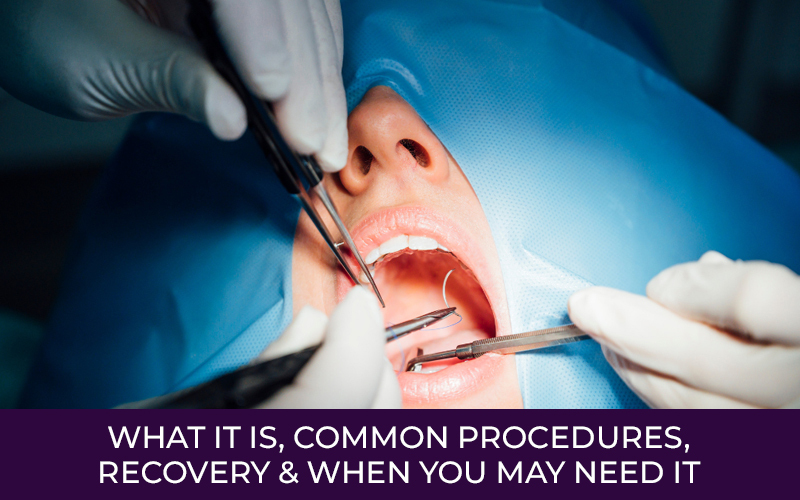
Oral Surgery: Procedures and Recovery
If your dentist has mentioned oral surgery, your first reaction may be a mix of curiosity and nerves. That’s completely normal. The phrase can sound bigger than the reality, and many oral surgery procedures are routine, carefully planned, and performed with comfort in mind.
What Is Oral Surgery?
Oral surgery is any surgical procedure performed on the teeth, gums, jawbone, or surrounding tissues of the mouth. It’s a broad category, ranging from removing a damaged tooth to rebuilding bone so a dental implant has a stable foundation.
You may also hear it called dental surgery. Depending on the procedure, treatment may be provided by a general dentist, an oral surgeon, or a periodontist, a dentist who specializes in gum disease and the structures that support the teeth. Which provider is involved depends on the complexity of the case and the training of the clinician.
When Might You Need Oral Surgery?
Dentists usually try conservative options first, such as fillings, cleanings, medications, or root canal therapy. Your dentist may recommend surgical treatment when those options aren’t enough or aren’t appropriate. Common situations include:
- A tooth that is too damaged or decayed to be restored
- Wisdom teeth that are impacted, painful, or crowding neighboring teeth
- Gum disease that has progressed beyond what a routine deep cleaning can address
- Missing teeth that you’d like to replace with dental implants
- Bone loss in the jaw that may affect implant placement or tooth stability
- Certain infections, such as an abscess, that don’t resolve without a procedure
Needing surgery doesn’t mean something went wrong. Often it’s simply the most predictable way to protect your oral health or prepare your mouth for the next step in treatment.
Common Oral Surgery Procedures
Below are procedures commonly grouped under oral surgery. Not every office performs every procedure, so it’s worth asking any provider which services they offer directly and which they’d refer elsewhere.
Tooth Extraction
A tooth extraction removes a tooth from its socket. Simple extractions involve teeth visible above the gumline. Surgical extractions may be needed when a tooth has broken at the gumline, has curved roots, or hasn’t fully emerged. Extractions are often recommended for severe decay, advanced gum disease, trauma, or crowding.
Wisdom Tooth Removal
Wisdom teeth, or third molars, often lack room to emerge properly. When they’re impacted, they can cause pain, swelling, or difficulty cleaning nearby teeth. Wisdom tooth removal is one of the most common oral surgery procedures, though not everyone needs it. Your dentist can review your X-rays and advise whether removal makes sense for you.
Dental Implant Surgery
A dental implant is a small post, typically titanium, placed in the jawbone to serve as a replacement tooth root. A crown, bridge, or denture is then attached to it. Implant placement is a surgical procedure, and its success depends heavily on planning, healthy gums, and enough supportive bone.
Bone Grafting
Bone can shrink after tooth loss or because of gum disease. Bone grafting adds bone material to areas of the jaw that need more volume or density. It may be done at the time of an extraction or as a separate step before implant placement, so there’s a solid base to work with.
Gum and Periodontal Surgery
When gum disease progresses, deep pockets can form around teeth that are difficult to clean. Periodontal surgery may be recommended to reduce those pockets, clean deep infection, reshape damaged tissue, or regenerate lost support. Other gum procedures, such as gum grafting, can address recession and protect exposed roots.
Surgical Treatment of Dental Infections
Most infections are managed with antibiotics or non-surgical care. In some cases, a dentist may need to drain an abscess or remove the source of infection surgically. Swelling, fever, or trouble swallowing alongside a dental infection should be evaluated promptly.
Signs You May Need an Oral Surgery Consultation
Only a professional exam can tell you what’s going on, but these signs may be worth having evaluated:
- Persistent tooth or jaw pain that doesn’t improve
- Swelling in the gums, face, or jaw
- Gums that bleed easily, feel tender, or are pulling away from teeth
- Loose teeth in an adult
- A tooth that’s cracked, broken, or badly decayed
- Pain or pressure near the back of the mouth, where wisdom teeth emerge
- Missing teeth that affect chewing, speaking, or confidence
- A bad taste or recurring pimple-like bump on the gums, which can sometimes indicate infection
Any one of these can sometimes indicate a problem that needs treatment. None of them automatically means you need surgery. Often the answer is simpler than people fear.
What Happens During an Oral Surgery Consultation?
A consultation is a conversation and an evaluation, not a commitment to a procedure. Most visits include:
1 Health history review. Expect questions about medical conditions, medications, allergies, and past dental treatment. Be thorough, because this affects safety and anesthesia decisions.
2 Clinical exam. Your provider checks your teeth, gums, bite, and any problem areas.
3 Imaging when needed. X-rays or 3D scans can show root position, bone levels, and nearby structures like nerves and sinuses.
4 Discussion of options. You’ll hear what’s recommended, what alternatives exist, and what each involves.
5 Your questions. This is the time to ask about risks, sedation options, timelines, and costs.
Questions worth asking include: Why do you recommend this procedure? Are there non-surgical alternatives? What type of anesthesia or sedation will be used? What does recovery look like for my situation?
Preparing for Oral Surgery
Your provider will give you instructions specific to your procedure, and those always take priority. In general, preparation may involve:
- Following any fasting instructions if sedation is planned
- Arranging a ride home and someone to stay with you if you’ll be sedated
- Reviewing your medications and supplements with your provider ahead of time
- Stocking soft foods, ice packs, and any prescribed medications before the day
- Planning a few days of lighter activity at work and home
- Wearing comfortable, loose-fitting clothing
If you feel anxious, say so. Providers can often explain what to expect step by step, which takes much of the fear out of the unknown.
What to Expect After Oral Surgery
Recovery varies by procedure and by person. A simple extraction typically feels quite different from a multi-step gum or implant procedure. Still, some experiences are common:
- Discomfort: Soreness is normal and is usually managed with medication recommended by your provider.
- Swelling: It often peaks around the second or third day, then gradually improves.
- Minor bleeding: Light oozing is common in the first day.
- Diet changes: You’ll likely eat soft foods at first.
- Activity limits: Strenuous exercise is typically discouraged for a few days.
Many people feel considerably better within several days, though full tissue healing takes longer. Your provider can give you a realistic timeline for your specific procedure.
Oral Surgery Aftercare Tips
Good oral surgery aftercare supports healing and lowers the risk of complications. General guidance often includes:
- Protect the blood clot. After an extraction, avoid spitting forcefully, using straws, or smoking, since these can disturb the clot and lead to dry socket.
- Use cold compresses. Ice packs applied in intervals during the first day can help limit swelling.
- Eat soft, cool or lukewarm foods. Yogurt, applesauce, scrambled eggs, mashed potatoes, and smoothies (eaten with a spoon) are common choices. Avoid crunchy, spicy, or very hot foods until cleared.
- Keep your mouth clean, gently. Your provider will tell you when to start rinsing and how to brush around the surgical site.
- Take medications as directed. This includes antibiotics if prescribed.
- Rest. Keeping your head elevated while resting can help with swelling.
- Skip tobacco and alcohol. Both can interfere with healing.
When Should You Contact Your Dental Provider After Surgery?
Some discomfort is expected, but call your provider promptly if you notice:
- Bleeding that doesn’t slow with gentle pressure
- Swelling that keeps increasing after the first few days
- Fever or chills
- Severe pain that isn’t relieved by prescribed medication
- Pus, a foul taste, or signs of infection
- Numbness that doesn’t fade as expected
If you have difficulty breathing or swallowing, seek emergency medical care right away. When in doubt, calling the office is always appropriate. Providers would much rather hear from you early.
Oral Surgery and Dental Implants
Many people first encounter oral surgery when they’re considering replacing a missing tooth. Dental implants rely on a strong connection between the implant and the surrounding jawbone and gum tissue, so successful treatment often depends on what happens before the implant is placed.
Depending on your situation, preparation might include:
- Extracting a tooth that can’t be saved
- Treating gum disease so the tissue around the implant is healthy
- Bone grafting to rebuild volume where bone has been lost
- Careful imaging and planning to determine implant position
Gum health matters here too. Untreated periodontal disease can affect both natural teeth and implants, which is one reason periodontal evaluation is often part of implant planning. If you’re exploring this route, you can learn more about gum and implant care from a periodontist’s perspective in Rockville, MD.
How to Choose the Right Provider for Oral Surgery
There’s no single right answer, but these patient-focused questions can help you evaluate any office:
- Experience with your specific procedure. Ask how often they perform it.
- Thorough diagnostics. A good plan starts with a proper exam and appropriate imaging.
- Clear treatment planning. You should understand the steps, timeline, and alternatives.
- Honest discussion of risks and benefits. No procedure is risk-free, and you deserve a straightforward conversation.
- Detailed aftercare instructions. Written guidance and a way to reach the office if questions come up are reassuring signs.
- Communication style. You should feel comfortable asking questions and never rushed.
A second opinion is also perfectly reasonable, especially for larger treatment plans.
Final Thoughts
Oral surgery covers a wide range of procedures, from tooth extraction to periodontal surgery and implant preparation, and most are designed to relieve pain, restore function, or protect long-term oral health. Understanding the process makes it much easier to make confident decisions. If you’re in Rockville, Maryland or the surrounding Maryland communities and have questions about your teeth or gums, a consultation with a qualified dental professional is the best way to learn what, if anything, you need.
Frequently Asked Questions About Oral Surgery
What is oral surgery?
Oral surgery refers to surgical procedures involving the teeth, gums, jawbone, and other mouth structures. Examples include tooth extractions, wisdom tooth removal, bone grafting, gum surgery, and dental implant placement.
What procedures are considered oral surgery?
Common oral surgery procedures include surgical and simple tooth extractions, wisdom tooth removal, dental implant surgery, bone grafts, periodontal (gum) surgery, and drainage or removal of certain infections. Which ones an office performs can vary.
How do I know if I need oral surgery?
Only a dental professional can say for sure. Persistent pain, swelling, loose teeth, severely damaged teeth, or advancing gum disease may warrant an evaluation, which typically includes an exam and imaging. Many problems can be resolved without surgery.
How long does oral surgery recovery take?
It depends on the procedure. Many people feel noticeably better within a few days after simple procedures, while complex surgeries or bone grafts may take longer for tissues to fully heal. Your provider can give a timeline tailored to you.
Is oral surgery painful?
The procedure itself is performed with local anesthesia or sedation, so you shouldn’t feel pain during treatment. Some soreness afterward is common and is usually managed with medication recommended by your provider.
What should I eat after oral surgery?
Soft, cool, or lukewarm foods are usually best at first, such as yogurt, applesauce, mashed potatoes, eggs, and soups that aren’t too hot. Avoid crunchy, spicy, or sticky foods until your provider says otherwise.
When should I call my dentist after oral surgery?
Contact your provider for heavy bleeding, worsening swelling, fever, severe pain that medication doesn’t relieve, or signs of infection. Seek emergency care immediately if you have trouble breathing or swallowing.
Can oral surgery be part of dental implant treatment?
Yes. Placing an implant is itself a surgical procedure, and related steps such as extractions, gum treatment, or bone grafting are sometimes needed beforehand to create a healthy, stable foundation.
Where can I find oral surgery information for Rockville, MD?
Start with a consultation with a licensed dental professional in the Rockville area, who can examine you, review imaging, and explain your options. Asking which procedures the office performs directly is a helpful first question.